%20(1).png?width=265&height=96&name=www.smartenergyanswers.com.auhs-fshubfsSmart%20Energy%20Answers%20Logo%20(HIRES)%20(1).png "Smart Energy Answers Logo")
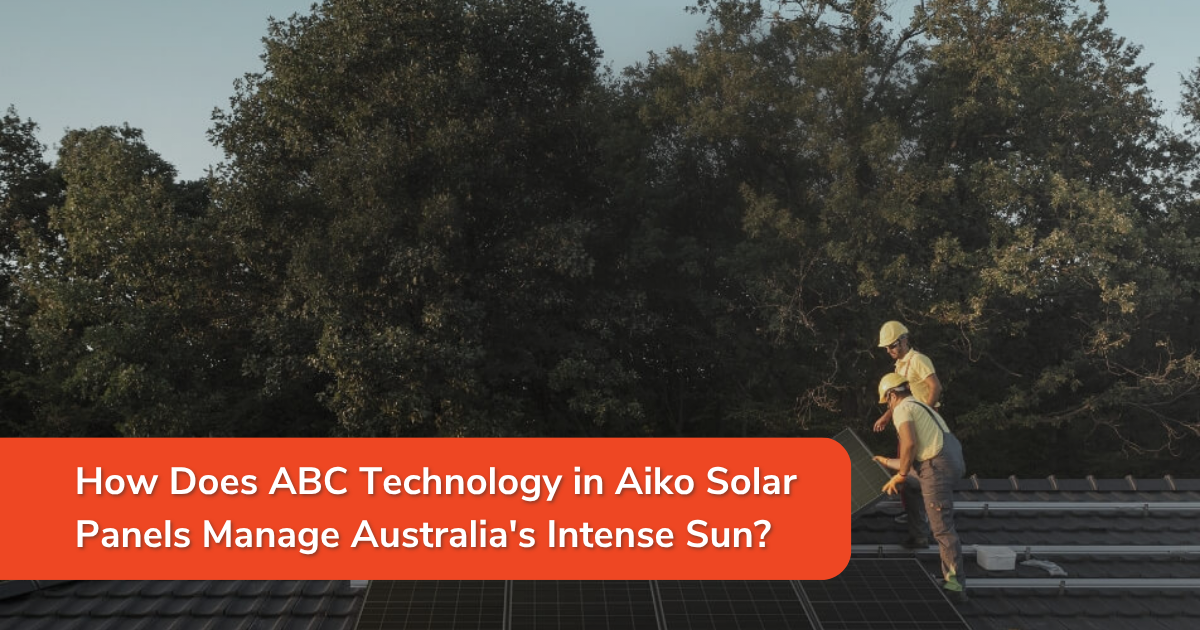
If you have ever wondered why some solar panels perform much better than others under the blazing Australian sun, the answer often comes down to the technology inside the panel. At Smart Energy Answers, a trusted nationwide solar company, we work with some of the most advanced panels on the market. One technology that has emerged as a strong contender is the ABC technology found in aiko solar panels. Understanding how it works helps you see exactly why it handles Australia's intense heat effectively.
What Does ABC Actually Stand For?
ABC stands for All Back Contact. It refers to the way all electrical connections in the solar cell are moved to the back of the panel, rather than running across the front surface like they do in conventional panels.
In a standard solar panel, metal busbars sit across the front of each cell. While they carry the electrical current, they also block a portion of incoming sunlight from ever reaching the cell. By moving every contact to the rear, aiko solar panels remove that barrier completely. The entire front surface is free to absorb sunlight, which provides a distinct performance advantage when dealing with the high levels of solar radiation typical of a summer day in cities like Perth, Brisbane, or Darwin.
Why Heat Management Matters in Australia
Australia's climate can present challenging operating conditions for solar equipment. Rooftop temperatures on a hot day climb very high, and standard panels lose efficiency as heat rises. This loss is measured by the temperature coefficient, which tells you how much output drops for every degree above standard test conditions.
While many conventional TOPCon panels carry a higher temperature coefficient, aiko solar panels are engineered to perform efficiently under heat thanks to their ABC cell design. That difference adds up meaningfully across a full Australian summer. The N-type silicon used also resists light-induced degradation better than older P-type cell technologies, holding performance consistently over time.
How the ABC Design Captures Light
Because there are no front-side busbars blocking the cell surface, the entire panel area contributes to energy generation. By reducing front-side shading losses, ABC cells are capable of absorbing a higher proportion of incoming sunlight compared to traditional cells.
Aiko also uses a high-density cell layout that packs cells tightly, reducing wasted space on the panel. Their interconnection method connects cells using hidden ribbons that sit flush and do not interrupt the cell surface. This design improves mechanical strength and reduces the risk of microcracks forming over the years. Together, these features mean that aiko solar panels can deliver highly efficient power output from the available roof space. For Australian homeowners with limited roof area, this is a significant practical advantage.
Shade Tolerance and Long-Term Durability
One of the most common challenges for any solar system is partial shading. Whether it is a nearby tree, a chimney, or a passing cloud, shade on even a small part of a conventional panel can drag down the output of the whole string. Aiko's ABC design addresses this by allowing current to bypass partially shaded areas more effectively, which limits the overall impact on system output.
Long-term durability is also worth mentioning here. Because there are no soldered ribbons on the front face of the cell, mechanical stress across the panel is reduced. This lowers the risk of microcracking over time, which is a known issue in panels that go through repeated heating and cooling cycles during Australian seasons. Aiko backs their panels with a product warranty and a long-term performance warranty to reflect this confidence in the technology's lifespan.
Pairing Aiko Panels with Sigenergy Batteries for Full Energy Independence
Getting the most out of high-performance aiko solar panels means storing the energy you generate efficiently. This is where sigenergy batteries come in. We recommend them as a strong pairing option because they work as a five-in-one system, integrating a solar inverter, battery storage, EV charging, and energy management into one unit.
These batteries use lithium iron phosphate chemistry, which suits Australian conditions well due to its thermal stability and long cycle life. Their integrated energy management features learn your energy habits over time to help optimise usage. The modular design also lets you expand storage capacity whenever your needs grow.
Why We Recommend This Combination at Smart Energy Answers
At Smart Energy Answers, we have completed thousands of installations across Australia and have been recognised as a top solar retailer multiple years running. We conduct comprehensive site assessments to ensure we match the most appropriate technology to each customer's specific roof profile, energy consumption patterns, and budget requirements, rather than pushing a one-size-fits-all approach.
Aiko solar panels bring engineering advantages that suit the Australian climate well. Their ABC technology maximises light absorption, handles heat efficiently, and resists long-term degradation under consistent sun exposure. Paired with sigenergy batteries, they form a complete system built for genuine energy independence.
If you are ready to explore whether this combination is right for your home, get in touch with our team for a free quote today.
Frequently Asked Questions

.png?width=514&height=121&name=Tesla%20Powerwall%203%20(new).png)




.webp?width=300&height=180&name=sigenergy-gold-installer-300x180%20(1).webp)